
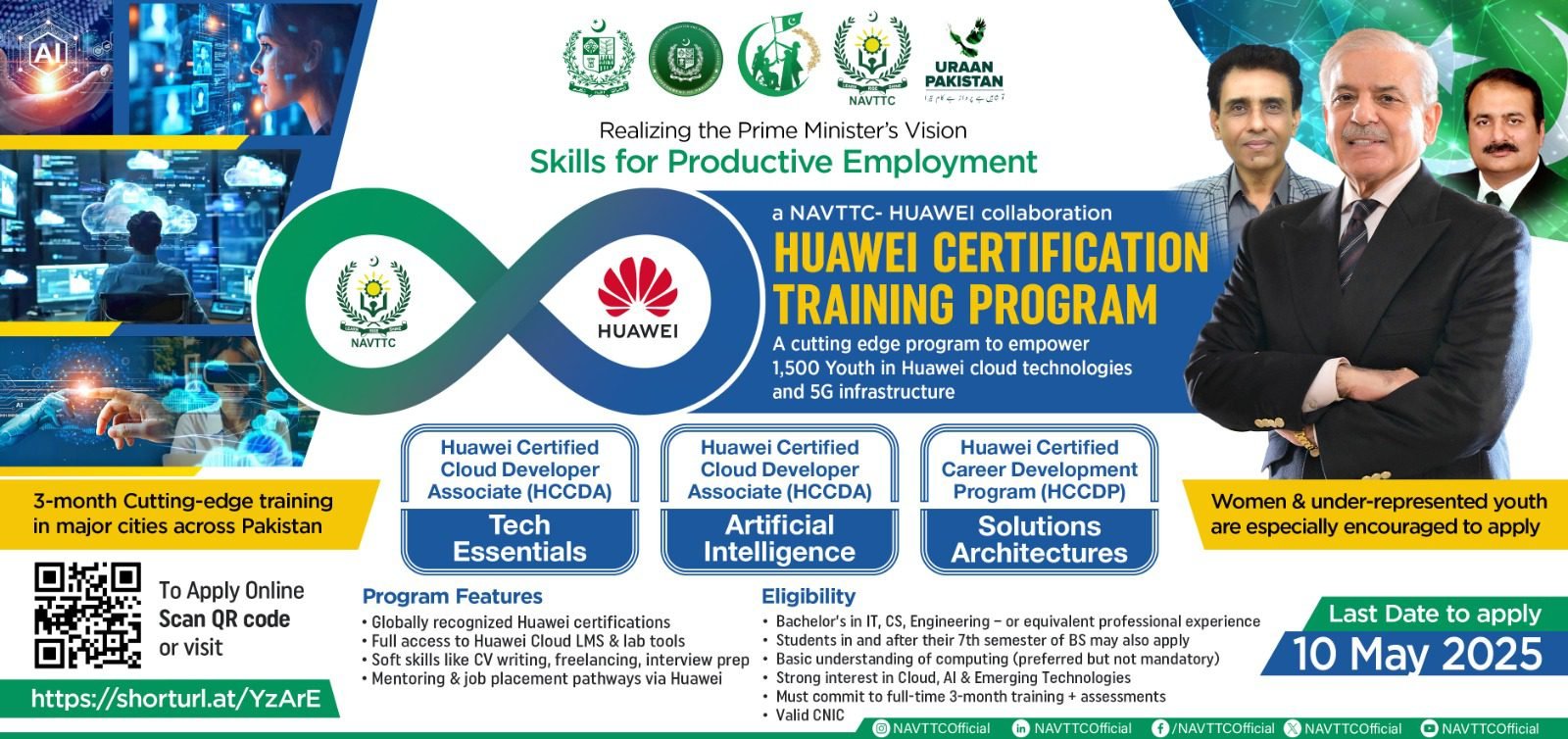
کیا آپ کے پاس ڈگری ہے مگر ہنر نہیں؟ یا آپ کسی ایسے ہنر میں مہارت حاصل کرنا چاہتے ہیں جو آپ کو روزگار کے وسیع مواقع دے سکے؟ اگر ہاں، تو قومی فنی و پیشہ ورانہ تربیتی کمیشن (NAVTTC) آپ کے لیے ایک سنہری موقع ہے۔ یہ صرف ایک تربیتی ادارہ نہیں، بلکہ پاکستان کے نوجوانوں کو عالمی معیار کی ٹیکنیکل اور پیشہ ورانہ تعلیم فراہم کرنے والا ایک قومی پلیٹ فارم ہے، جہاں آپ کا ہنر آپ کی ڈگری سے زیادہ طاقتور ثابت ہو سکتا ہے۔
تصور کیجیے کہ چند ماہ کی تربیت کے بعد آپ ایک سکلڈ الیکٹریشن، ایسے پلیٹر، سائبر سیکورٹی ایکسپرٹ، یا فوڈ پروسیسنگ ٹیکنیشن بن جائیں، جس کی مارکیٹ میں زبردست مانگ ہو۔ NAVTTC نہ صرف آپ کو مفت یا سبسڈائزڈ تربیت دیتا ہے بلکہ سرٹیفیکیشن کے بعد آپ کو روزگار کے مواقع تک رسائی بھی فراہم کرتا ہے۔ یہ وہ راستہ ہے جو بے روزگاری کے بحران کو ہنر مند افرادی قوت میں بدل رہا ہے۔
کیا آپ اپنے ہاتھوں کے ہنر کو اپنی روزی کا ذریعہ بنانے کے لیے تیار ہیں؟ کیا آپ میں وہ لگن ہے جو کامیاب ٹیکنیشن یا ماہر کی پہچان ہے؟ ذیل کی جدول میں ہم نے NAVTTC کے نظام اور مواقع کی بنیادی جھلک پیش کی ہے۔ اسے پڑھیں، اپنے شوق کا تعین کریں، اور اپنے مستقبل کے ہنر کی طرف پہلا قدم اٹھائیں۔
| تفصیل | معلومات کا خلاصہ |
|---|---|
| ادارے کا پورا نام | قومی فنی و پیشہ ورانہ تربیتی کمیشن (National Vocational & Technical Training Commission) |
| بنیادی مقصد | پاکستان کے نوجوانوں کو مارکیٹ کی ضروریات کے مطابق فنی اور پیشہ ورانہ ہنر فراہم کرنا |
| اہم شرائط | پاکستانی شہری، عمر 16-35 سال، تعلیم: کم از کم میٹرک (کورس کے لحاظ سے) |
| اہم پیش کردہ شعبے | آئی ٹی & کمپیوٹر، الیکٹریکل & مکینیکل ٹریڈز، کنسٹرکشن، ہیلتھ کیئر، ہاسپٹیلیٹی |
| درخواست کا طریقہ | NAVTTC کی سرکاری ویب سائٹ پر آن لائن رجسٹریشن / مخصوص تربیتی اداروں کے ذریعے |
یہ تو صرف آغاز ہے۔ اس مکمل گائیڈ میں، ہم آپ کو NAVTTC کے تمام پروگراموں، مفت کورسز، سرٹیفیکیشن کے فوائد، اور تربیت کے بعد ملازمتیں تلاش کرنے کے طریقوں سے آگاہ کریں گے۔ پڑھتے رہیں، کیونکہ یہ معلومات آپ کی قسمت کا ہنر ثابت ہو سکتی ہے۔
Table of Contents
What is NAVTTC?
NAVTTC leads the charge for technical education and vocational training in Pakistan. It sits right at the top—tasked with setting the rules, keeping things coordinated, and making sure standards stay high across the board. Working under the Ministry of Federal Education and Professional Training, NAVTTC shapes the country’s skilled workforce, getting people ready for jobs both at home and abroad. In a lot of ways, NAVTTC helps drive economic growth by connecting what businesses need with what workers can actually do.
The commission doesn’t do this alone. It teams up with provincial TEVTAs, private institutes, and industry partners to put together training that actually matters. We’re talking everything from quick certificate courses to full-on diploma programs, and they’re always looking at what skills are in demand. For 2024-25, NAVTTC is zeroing in on things like emerging tech, green skills, and trades that can boost exports—basically, the areas that matter most for Pakistan’s future.
But training’s just one piece. NAVTTC also builds the curriculum, trains the trainers, sets up certification standards, and keeps an eye on the labor market. The qualifications NAVTTC hands out are recognized internationally, so skilled workers from Pakistan can land jobs anywhere—and local industries get the talent they need to grow.
Key Training Programs and Courses
NAVTTC runs a wide range of training programs that line up with what the job market actually wants—both now and down the road. They mix real hands-on training with solid theory, and the facilities are modern, so you’re not stuck working on outdated equipment.
Here’s what they offer:
Information Technology & Computer Sciences
– Graphic Design & Multimedia
– Web Development & E-Commerce
– Cyber Security & Networking
– Software Development (Python, Java)
– Digital Marketing & SEO
Engineering & Technical Trades
– Electrical Technology & Solar Installation
– Mechanical & Automotive Technology
– HVAC & Refrigeration
– Plumbing & Sanitary Fittings
– Welding & Fabrication Technology
Construction & Building Trades
– Masonry & Tiles Work
– Painting & Decoration
– Carpentry & Furniture Making
– Electrical Wiring & Building Maintenance
Services Sector
– Hospitality & Hotel Management
– Healthcare & Paramedical Training
– Beauty & Cosmetology
– Fashion Design & Dress Making
– Cooking & Bakery Arts
Emerging Technologies
– Artificial Intelligence Basics
– Robotics & Automation
– Drone Technology
– Renewable Energy Systems
Every program sticks to the National Vocational Qualification Framework (NVQF). That means you get consistent quality and standards, no matter where you train.
Eligibility Criteria and Registration Process
NAVTTC training programs have pretty clear eligibility rules, but they shift a bit depending on the course. Even so, there’s a basic checklist you’ll see for almost every program — mostly to make sure you can actually finish the training.
Here’s the general rundown:
- You need to be a Pakistani citizen and have a valid CNIC or B-Form.
- The usual age range is 16 to 35, but they stretch that a bit for some advanced stuff.
- For most technical trades, you need to have passed Matric (Grade 10). If you’re eyeing IT or advanced tech courses, they want you to have Intermediate.
- Some trades demand you’re physically fit since there’s real work involved.
Language-wise, just basic Urdu or English, depending on the course. - They also set aside spots for some groups that don’t always get a fair shake:
- At least 30% of seats go to women in every program.
- 5% are reserved for people with disabilities.
- They also welcome transgender folks, students from remote or rural areas, and families of martyrs or disabled persons.
Here’s how you sign up:
- First, check out the available courses on the NAVTTC site or just drop by your local TEVTA office.
- Double-check you fit the course requirements.
- Get your documents together — CNIC, education certificates, domicile, and some photos.
- Apply online through the NAVTTC portal, or go to one of their centers.
- For popular or technical programs, you’ll need to take an admission test. Some advanced ones include interviews too.
- Final picks depend on merit, but those quotas for priority groups always apply.
- Once you’re in, orientation and classes kick off.
Registration pops up every quarter, and they run several intake batches a year. Most programs don’t cost a thing, and if you need it, stipends are on the table for those who qualify.
Certification and Recognition
NAVTTC certifications really open doors—both at home and abroad. Employers trust these credentials because they prove you actually know your stuff. NAVTTC doesn’t just hand them out, either. They’ve got tough assessments in place, so when you have their certificate, you’ve genuinely met industry standards.
Here’s what they offer:
- Certificate of Attendance: For quick, short-term programs, usually just a few weeks.
- Skills Certificate: Focused on learning a specific skill—these run from one to three months.
- National Vocational Certificate (NVC): Comes in Levels 1 through 4 and takes anywhere from six months to two years.
- Diploma of Associate Engineer (DAE): A full three-year technical diploma.
- Advanced Diplomas: For those who want even more specialized training after their main qualification.
How do they make sure you’re ready? You’ll see a mix of written exams, hands-on skill tests, oral exams, and real project work. Plus, they actually check in with employers to see how trainees are doing on the job. It’s not just about passing a test—it’s about proving you can work in the real world.
And here’s the big thing: NAVTTC’s certifications aren’t stuck in one country. Thanks to agreements with places like the Gulf states, Malaysia, Singapore, some trades in the UK, and even Australia, these qualifications line up with international standards. So, if you’re aiming to work abroad, these credentials help you get there. The National Vocational Qualification Framework (NVQF) makes it even easier for Pakistani skilled workers to find opportunities all over the world.
Training Methodology and Facilities
NAVTTC training centers don’t just stick to old-school lectures. They mix in plenty of hands-on work, so you’re not just sitting and listening—you’re actually doing the job. They’ve put a lot of money into upgrading their facilities all over Pakistan. The goal? Make sure students train in environments that look and feel like real workplaces.
Here’s how the training works:
- 70-30 Rule: Most of your time—about 70%—goes into hands-on practice. The rest covers theory.
- Competency-Based Training: You focus on picking up real, specific skills, not just memorizing facts.
- Industry Workshops: Professionals from the field come in regularly to share what’s actually happening out there.
- Live Projects: Local businesses give real assignments, so you get a taste of actual work.
- Simulation Training: For technical trades, you use advanced simulators to practice safely before the real thing.
- Digital Learning: There’s a mix of online resources and in-person training, so learning doesn’t stop at the classroom door.
- The facilities themselves are built for serious training:
- Modern Workshops: These have up-to-date machines and equipment you’ll find on the job.
- Computer Labs: Packed with the latest hardware and all the right software.
- Science Labs: Especially for engineering and tech programs—everything’s set up for real experiments.
- Resource Centers: Libraries stacked with technical books and digital guides.
- Common Spaces: Big centers offer hostels, cafeterias, and even sports facilities.
- As for the trainers, NAVTTC doesn’t cut corners. Every trainer has at least five years of real industry experience. They hold teaching certifications, get regular updates straight from the field, and even go abroad for further training.
All of this comes together to make sure NAVTTC training isn’t just academic—it’s exactly what the industry wants right now.
Job Placement and Entrepreneurship Support
NAVTTC does a lot more than just train people — they actually help graduates land jobs. They’ve built real connections with companies, so it’s easier for skilled folks to move straight from the classroom into work.
Here’s what they offer:
- Job Fairs: Regular events where graduates can meet employers face-to-face.
- Industry Liaison: NAVTTC has staff who actively link grads with companies looking to hire.
- Digital Portal: This online platform matches graduates with job openings.
- Career Counseling: Get advice on building a career and what paths make sense.
- Interview Prep: Workshops to sharpen up your resume and interview skills.
And the results speak for themselves. In 2023, 68% of NAVTTC graduates found jobs within six months. IT leads the way with an 85% placement rate, followed by healthcare at 78% and electrical trades at 72%. About 12% even landed jobs overseas. Women aren’t left behind either — 63% of female graduates found employment.
- If you want to start your own business, NAVTTC’s got your back there too:
- Business Incubation Centers: Support to get your startup off the ground.
- Microfinance Linkages: Help getting small business loans.
- Mentorship Programs: Advice from folks who’ve already made it.
- Toolkit Grants: Funds to buy the tools you need for your trade.
- Market Access Assistance: Guidance on connecting with customers and suppliers.
All these efforts make sure the training you get actually pays off — not just for you, but for the whole country.
International Collaborations and Future Vision
NAVTTC’s partnerships with organizations across the globe do more than just boost the quality of training — they open doors for Pakistani skilled workers everywhere. These connections pull in the latest standards and global recognition, giving Pakistan’s vocational education a serious upgrade.
Here’s a quick look at who’s involved:
- German Cooperation (GIZ) brings in the dual education system, mixing classroom learning with real-world experience.
- The Korean Government (KOICA) focuses on cutting-edge technical training in advanced manufacturing.
- Chinese institutions team up for infrastructure trades, so students get hands-on skills that matter.
- Australian programs step in to tighten up quality assurance and assessment.
- UK partners sign agreements that make qualifications count on both sides.
Looking ahead to 2024-2030, NAVTTC has a clear game plan:
- Go fully digital — every training process, online.
- Make green skills part of the core, so students learn about renewables and sustainability from the start.
- Push for women’s participation to hit 50%, not just as a goal, but as a new standard.
- Get ready for Industry 4.0 — automation and AI aren’t the future, they’re happening now, and NAVTTC plans to keep the workforce ahead of the curve.
- Target international markets for exporting skilled workers, matching training to what the world actually needs.
- Start vocational education research centers, driving new ideas and improving what works.
All of this puts NAVTTC right at the heart of Pakistan’s economic strategy. The aim isn’t just to fill jobs today — it’s to build a workforce ready for whatever comes next.
Checkout the Parwaz Card Scheme of Punjab Government here…

1 thought on “NAVTTC 2025-26 | National Vocational & Technical Training Commission Guide”